IV INTERNATIONAL CONGRESS at DELHI
Women, Work and Health
The 4th International Congress on Women, Work & Health took place in New Delhi from November 27 to 30, 2005. This congress was part of a series of global events aimed at addressing issues related to women's health in the workplace, their rights, and the impact of working conditions on their overall well-being. The congress gathered experts, researchers, policymakers, and activists from around the world to discuss various topics under the theme of women, work, and health. The 3 main agendas were
1. Gender Mainstreaming at Home and at Work
2. The Changing World of Work
3. The Scientific Practice of Health and Development
Stree Shakti emphasized the intersection of gender, work, and health, with particular attention to the unique challenges women face in the workforce. Special emphasis was laid on occupational health hazards and their resolution for optimal safety and wellbeing.
OUTCOMES
- The event was significant in raising awareness about the often-overlooked issues related towomen's health in the workplace, particularly in developing countries.
- It contributed to the global discourse on gender equality in the workforce and highlighted theneed for more inclusive and supportive work environments for women.
ACCESSING OPPORTUNITIES, EMPOWERING ELDERLY
Ageing Women
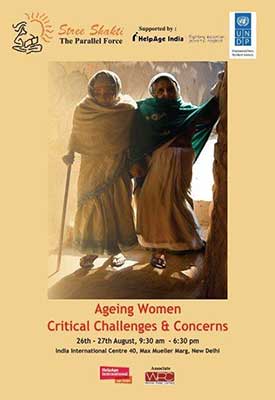 Elderly women represent one of the most socio-economically vulnerable groups in
Indian society, facing issues such as weak social security, dwindling savings, rising medical expenses, and social isolation. Stree Shakti envisions fostering a robust network, elevating the discourse on 'Women and Ageing’.
Elderly women represent one of the most socio-economically vulnerable groups in
Indian society, facing issues such as weak social security, dwindling savings, rising medical expenses, and social isolation. Stree Shakti envisions fostering a robust network, elevating the discourse on 'Women and Ageing’.
Our objectives extend to :
- Identifying innovations and best practices for supporting aged women
-
Undertaking policy advocacy and bringing the issues and concerns of aged women on the agenda of government agencies and departments
-
Mainstreaming the issues and concerns of the aged women on the agenda of
women’s groups and other relevant agencies
-
Demanding free travel for elderly women to enhance their mobility, and allow them access to healthcare, social connections, and essential services
KEY MILESTONES
2013: The International Conference on “Ageing Women: Critical Challenges and
Concerns” was held from 26-28th August 2013 in New Delhi. Delegates from
Afghanistan, Bangladesh, India, and Nepal gathered to establish SAFAW with support
from Help Age India and UNDP India.
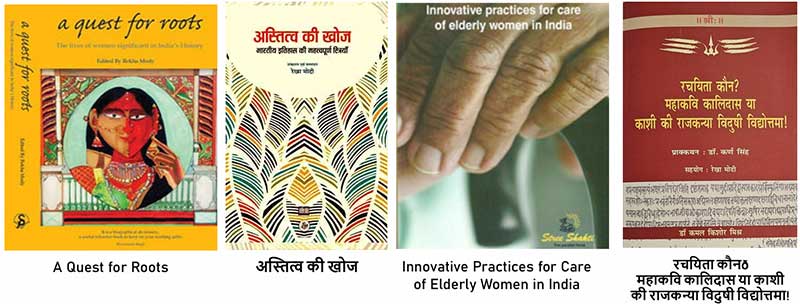
2016: A publication titled A Collection of Innovative Practices for the Care of Elderly Women in India, edited by Rekha Mody, was released by Hon. Speaker Sumitra Mahajan Ji, with support from UNFPA.
MOBILITY – THE ROAD TO DEVELOPMENT
Free Travel for Women
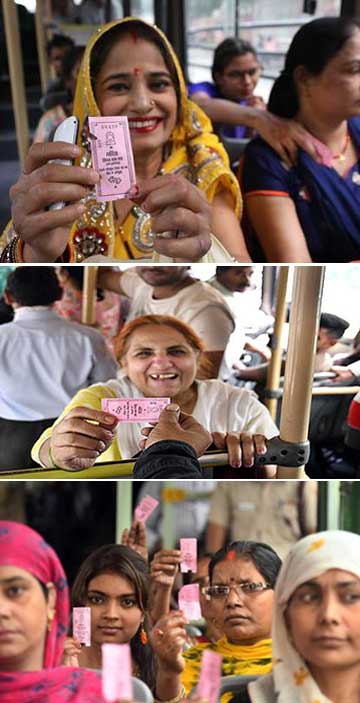 Female mobility has always been Stree Shakti’s primary concern. In case of elderly women things get worse as their income dwindles and medical expense goes up they often face isolation resulting in serious health issues both physical and mental. Our research of one year conducted in different part of India pointed out that elderly women due to reasons like financial insecurity & instability confine themselves to the household only.
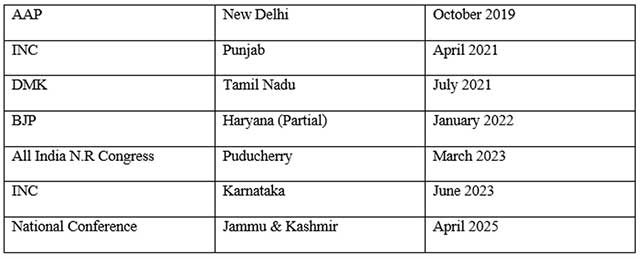
Free Travel Pass: A silent Revolution - A free travel pass on public buses to the women will encourage them to travel and link up with the world. The Free pass introduced by three prominent states of India, Delhi, Punjab and Tamil Nadu have exciting findings. Different states have taken a different route to fund it.
States with free travel -
TRANSFORMING POLITICS, EMPOWERING WOMEN
Women Lead
Women Lead is a Joint initiative of Stree Shakti - The Parallel Force, Indian School of Democracy and Shakti co-founded by Hemakshi Meghani - dynamic organizations dedicated to political empowerment. So while Indian School of Democracy is a non partisan organization with a mission to nurture principled political leaders focusing on making political representation more value driven, inclusive and equitable, Political Shakti Founder Tara Krishnaswamy is a citizen’s collective campaign for increased women’s representation as MLAs and MPs.
Although women constitute approximately half the population, worldwide figures on the representation of women in leadership and their participation in Parliaments remains low. As of November 2018, 24% of all women national parliamentarians across the world were women, a 13% increase from 1995 (11.3% women parliamentarians). India has 14 percent of elected women representatives in the national parliament, only ahead of Sri Lanka (5.3%) and Maldives (4.7%).
Women Lead is a collective effort ‘of the women for the women and by the women’ where multiple talented and dedicated organizations have come together to stand up for a greater cause – Equality in Political Space. It pivots around the very need of women candidates to holistically improvise upon their overall competence on various standard processes like filing candidature, campaigning, mapping constituencies identifying local issues, using media for awareness and citizen education.
Know More
DOCUMENTING HISTORY
Publications by Stree Shakti
With an aspiration to document history, especially women’s history and aspirations, Stree Shakti has published several coveted works -
A vision for the Valley
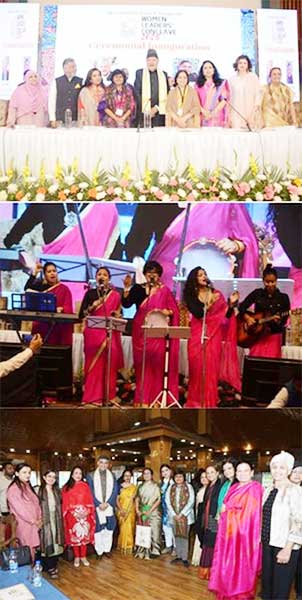
Women Leaders’ Conclave
 As India advances on its journey towards becoming a Viksit Bharat, the question
of equity must move from the margins to the centre of the development agenda.
Growth that is not inclusive cannot be sustainable, and progress that does not
expand opportunity cannot be transformative.
As India advances on its journey towards becoming a Viksit Bharat, the question
of equity must move from the margins to the centre of the development agenda.
Growth that is not inclusive cannot be sustainable, and progress that does not
expand opportunity cannot be transformative.
The second edition of WLC is anchored in the theme ‘Claiming Equity in Viksit
Bharat’. The Conclave will place women’s leadership, voice, and agency at the
heart of conversations on development, governance, and institutional
transformation. It will serve as a high-level, multi stakeholder platform to
examine how equity can be meaningfully embedded across economic, social,
and environmental domains, and how leadership can act as a catalyst for this
shift.
The Conclave will examine how women’s leadership can move from participation
to influence, and from visibility to decision-making authority. It will interrogate
the subtle and overt barriers that continue to shape women’s trajectories across
governance, academia, corporate leadership, technology, and grassroots
institutions. It will also spotlight models that demonstrate how women-led
institutions often generate more inclusive, community-responsive, and
sustainable outcomes.
Know More